She Couldn’t Go to War. So She Prepared Every Nurse Who Did.
In honor of National Nursing Week, learn about the real nurses of World War I who inspired the fictional ones in The Fevered World.
Like many young men during World War I, Helen Miller, the nurse at the center of my historical novel The Fevered World, lies about her age to enlist in the army.
It is 1918. America had entered the war the year prior and the shortage of nurses has forced the Army Nurse Corps to expand its age limits—trained, unmarried women between the ages of 21-45 are now eligible. Helen is only 20. She fudges the paperwork.
The first to challenge her is Anna Caroline Maxwell.
“How old are you, Nurse Miller? You appear just out of the schoolhouse.”
“I do look young. It’s rather irksome, no one ever takes me seriously.” Would Miss Maxwell leave it at that? Did she see Helen’s determination, recognize what it would cost her to be sent home?
“They don’t take you seriously because you often act fickle. Your questions and actions jump from one thing to the next. Find something to capture your attention and dig in deeper.”
“Yes, ma’am. You’re quite right. Thank you for your guidance.”
The Real Woman Who Shaped the Army Nurse Corps
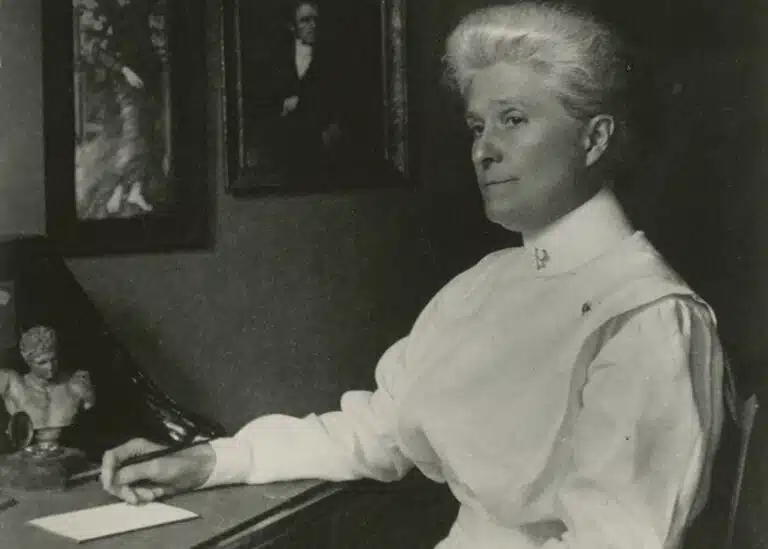
I have no doubt the real Miss Maxwell would have questioned Helen’s youth—she was known for missing no details—but also considered there might be an important reason for Helen Miller to preemptively enlist. She would have kept her eye on Helen and reserved her judgement.
Maxwell started nursing in 1874 and spent the next thirty years training nurses at schools in Montreal, Boston, and then Presbyterian Hospital in New York, whose program eventually became Columbia University’s School of Nursing.
In 1898, when the Spanish-American War broke out, Maxwell went directly to the Surgeon General and argued that trained nurses—not well-meaning volunteers—should care for the military’s wounded. She won, was deployed to a field hospital in Georgia, and found conditions that appalled her: poor sanitation, rampant typhoid, soldiers dying not from combat but from neglect. She and her nurses changed that.
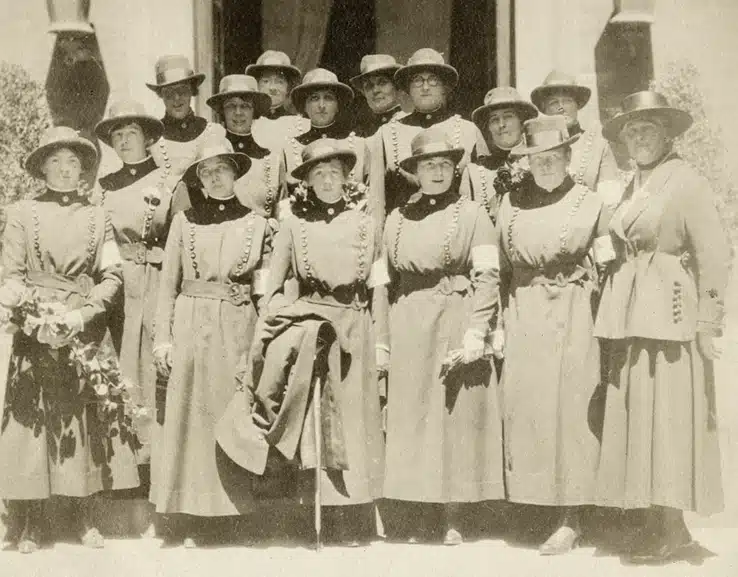
After, she was instrumental in helping establish the Army Nurse Corps and in gaining military officer rank for nurses. She also helped design the uniform—every stitch a statement that these women were professionals with standing and authority, not volunteers who could be dismissed when inconvenient.
She was not a soft woman. She was a rigorous one. And her nurses loved and respected her because they knew she had their best interests in mind.
Limited By Age
When the Great War came, Maxwell was in her sixties and barred from serving as an enlisted officer because of her age, though she was determined to be involved.
She went to Ellis Island, where the first mobilization station for nurses was set up at the United States Quarantine Hospital, and did what she had always done: prepared the nurses going in her place. Then she traveled with them to France.
In my novel, she and Helen first meet on Ellis Island. And then, weeks later, aboard the ship they sail to France, when Helen discovers influenza among the soldiers, it is Miss Maxwell she trusts by her side to bring credibility to the situation.
Helen and Miss Maxwell returned to witness a petty officer collapse to the floor, as if with great fatigue. He bled from his ears and hemorrhages in the skin around his eyes erupted. Two corpsmen carried him to a bed. The doctors and corpsmen hovered, uncertainty on their faces. She and Miss Maxwell approached.
“I know what ails this man,” Helen blurted. “It’s influenza.”
Everyone turned to gape. The navy captain in charge creased his brow. His voice chided. “This is a matter for a doctor, not a nurse. Influenza does not cause a man to bleed from his ears. Please do not interrupt again.”
She blushed. A painful death would be better than a public scolding.
Thankfully, Miss Maxwell interrupted next. “Nurse Miller tells me this is a virulent influenza, perhaps a novel strain, and very infectious. And I, as a nurse, have significant experience with contagious diseases. Sir.” Miss Maxwell’s stare challenged the captain. “I am Superintendent Anna Maxwell. Perhaps you’ve heard of my work with typhoid at Camp Thomas during the Spanish American war? May I have a word?”
Miss Maxwell stepped aside from the group and waited for the captain, many years her junior, who probably still wore knee pants during the Spanish American war and now looked like a schoolboy in trouble. Miss Maxwell was not someone to trifle with.
Helen and the others still huddled around the petty officer’s bed listened intently while trying to look busy. She considered the qualities that made Miss Maxwell so respected: she held the highest ideals for herself and everyone around her, she asked for what she wanted—demanded if necessary—and no detail slipped her attention. She persisted, no matter the challenge. And patients always came first. She was called the American Florence Nightingale for a reason.
Helen took brief pity on the navy captain as she watched his face alter from annoyance to surprise to resignation. He swallowed hard, and she worked to keep a smile from her face. When they returned to the group, the captain said, “Nurse Miller, since you possess knowledge of this particular condition, please share with us what you know.”
The Perfect Mentor
Maxwell felt like an ideal mentor for my young nurse, and the irony was irresistible. A woman too old to enlist. A woman too young to be admitted. Both of them determined the rules would not keep them away.
Join Readers
who receive my occasional e-postcards—short notes delivered to your inbox with updates on the novel’s publication in February 2027, interesting research and history behind the story, and what I’m working on next.