Spanish Flu Deaths Continue to Stun
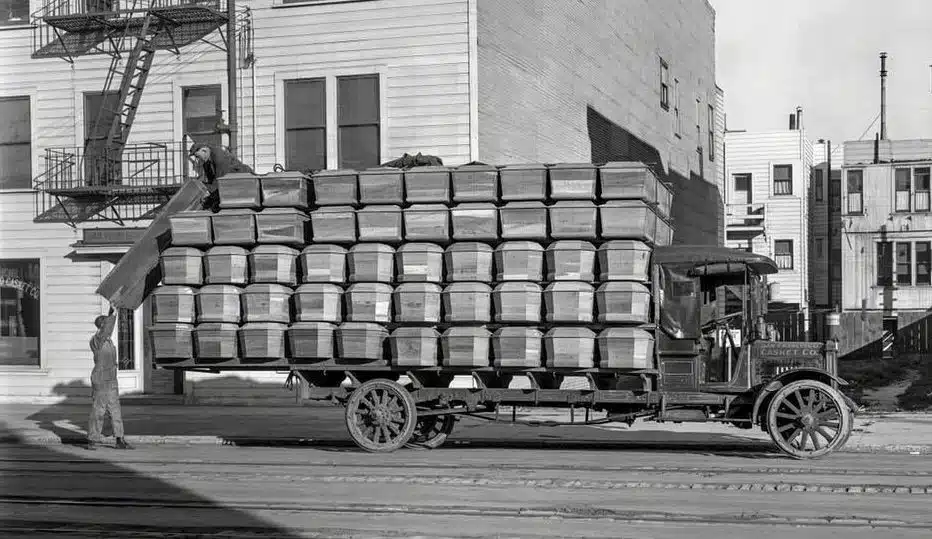
The Spanish flu death toll is estimated at 50,000,000 people. That number continues to stun me and was one of the reasons I was inspired to write a historical fiction novel about the 1918 influenza pandemic. I think it’s hard for us—in our modern world of vaccines and antivirals and antibiotics—to fathom 50 million deaths from flu or even 50 million deaths from anything.
Interesting Facts and Perspective About Spanish Flu Deaths:
An estimated one-third of the world’s population was infected during the 1918 influenza pandemic. Given the typical size of families then, it’s likely every household had at least one person sick.
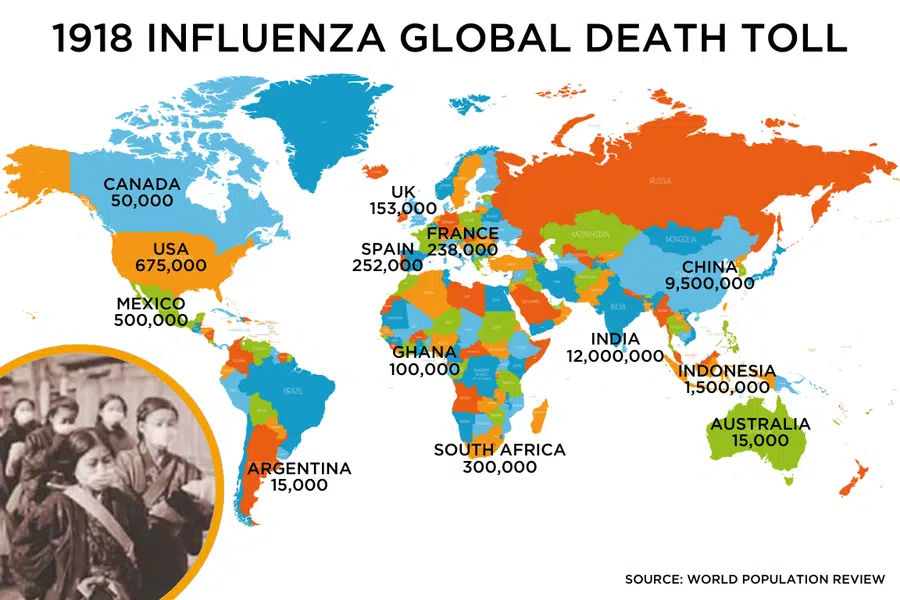
The Spanish flu death toll was greatest in India with 12 – 17 million deaths. Some 675,000 people died in the U.S.
Many believe the 1918 flu is called the “forgotten pandemic” because it was overshadowed by World War One. Did you know Spanish flu deaths outnumbered World War One deaths by at least three times?
National Geographic reports some 25 million people died of the infamous Black Plague.
The Ebola outbreak in 2014 claimed 11,325 people, mostly in Guinea, Liberia, and Sierra Leone.
There were about 940,000 deaths worldwide from AIDS in 2017.
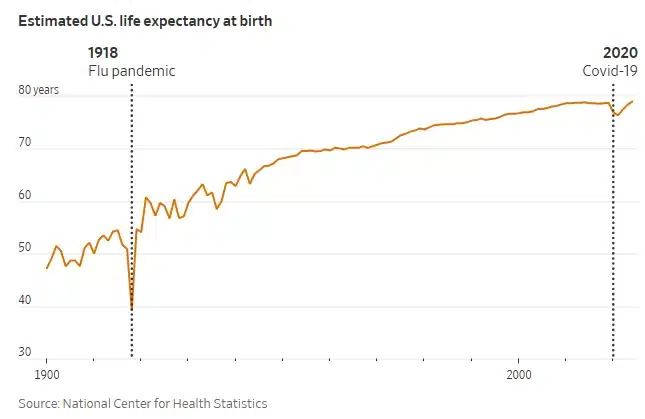
In 1918, the average life expectancy in the United States dropped by about 12 years for both men and women.
More than 80,000 Americans died of the flu in the winter of 2017-2018, the highest number in over a decade.
Today, New York City is the most populated city in the U.S. with some 8,600,000 people. About 40 million people live in California. Can you imagine, in one year, everyone in NYC and California dying from the flu?
When I think about what continues to fascinate me about the 1918 influenza and inspire me to keep researching and writing about this forgotten pandemic, I come back to that sheer number of Spanish flu deaths: 50,000,000.
Dear Ms. Andrews:
I am preparing a book for publication by Taylor & Francis. The book title is “History That Shaped Safety and Health Practice.” There are 12 chapters and a number of historical articles within each chapter. In one chapter I provide a summary of the Spanish Flu.
In that article I would like to include the graph you have on your website showing the life expectancy and the big dip in 1918. A couple of questions:
1. Would you allow me to copy that figure from your website for my use?
2. What is the source for the graph?
3. Is the graph copyrighted and by whom?
4. If I use the graph, what credit should I give with its use?
Thanks for your assistance.
Sincerely,
Roger Brauer
Roger Brauer, Ph.D., P.E.
602 W Austin St
Tolono, IL 61880
Email: r.brauer@mchsi.com
Phone: 217-485-5582
Thank you for reaching out, Roger. I’ll send you an email with the information I have. Congratulations on your book.